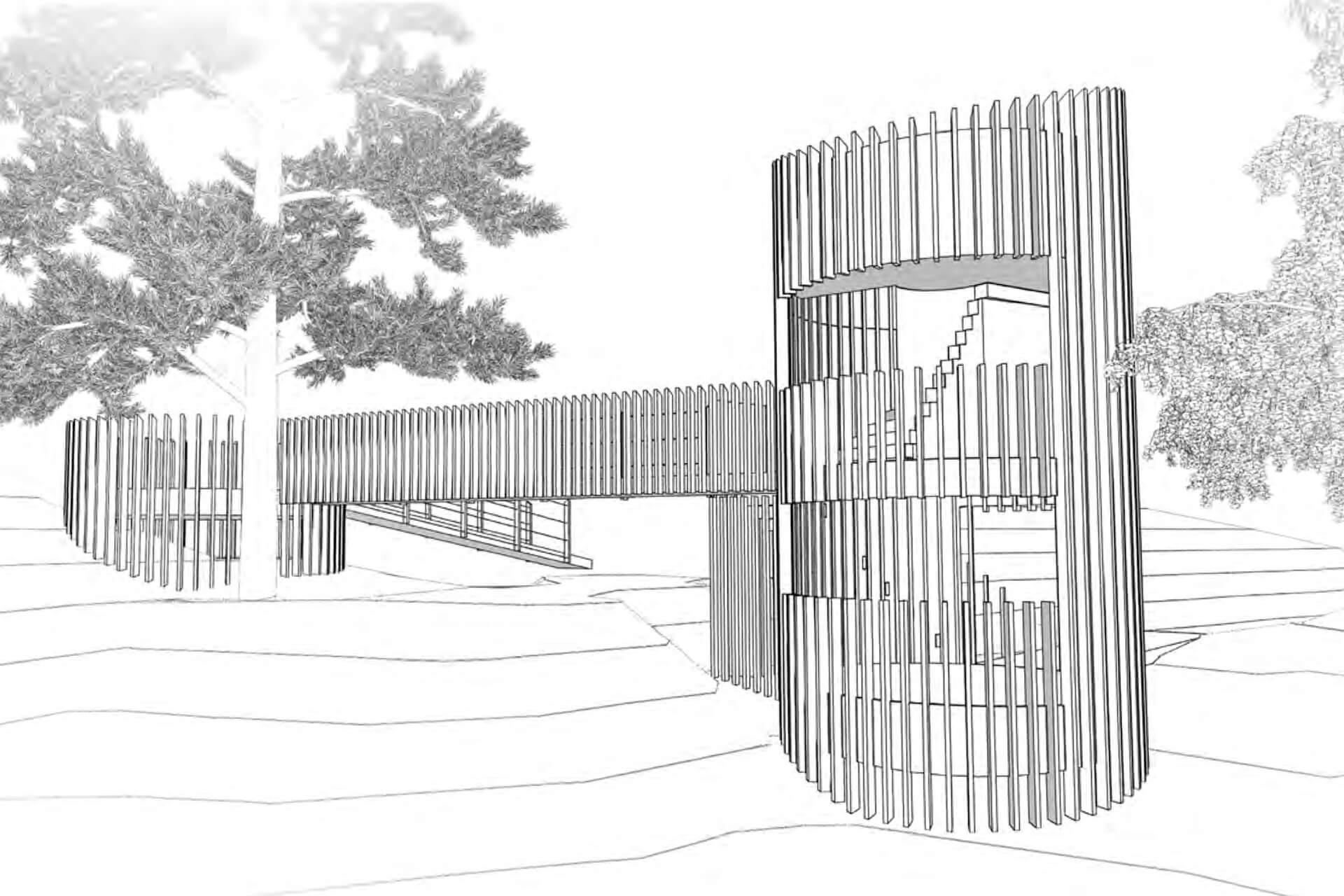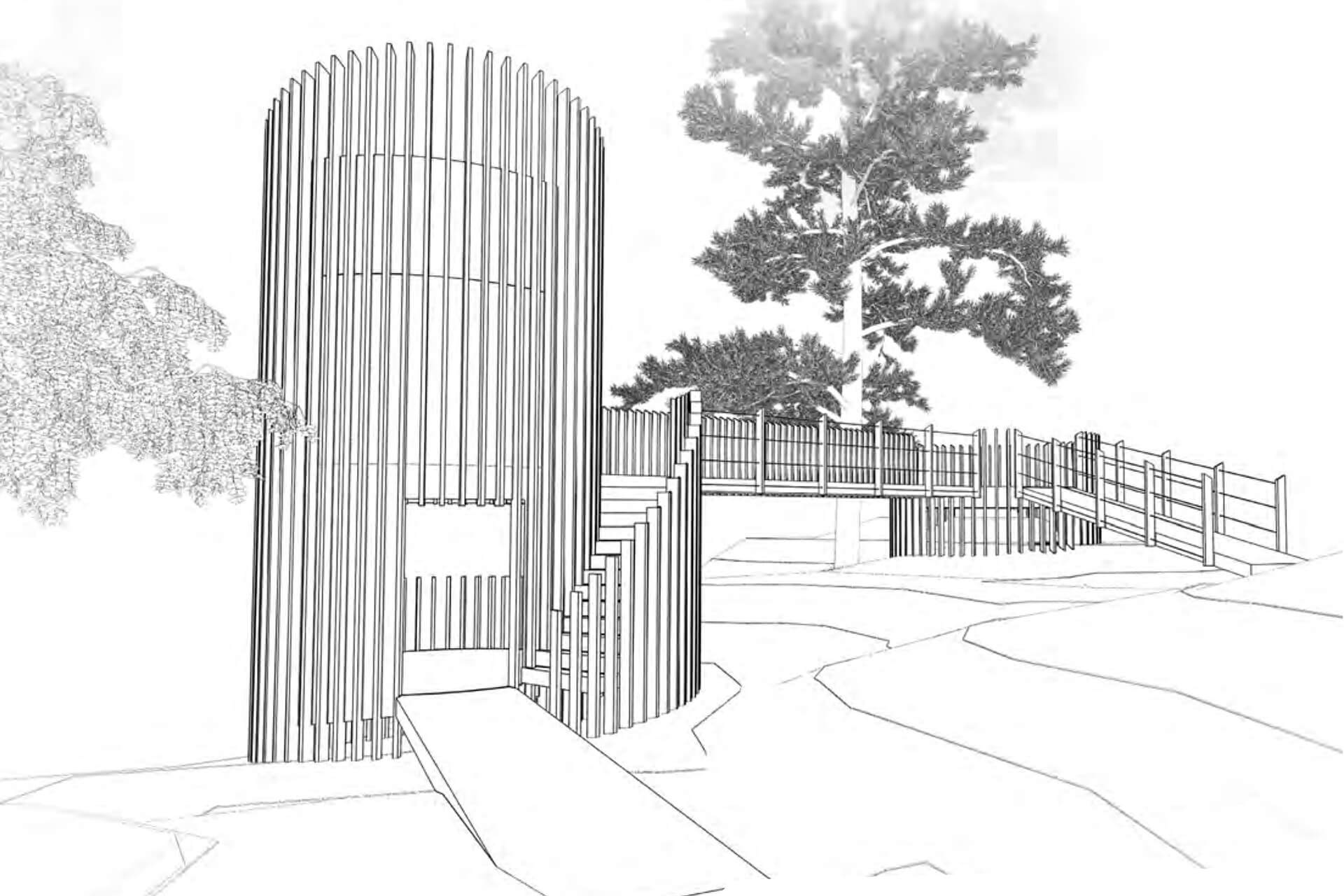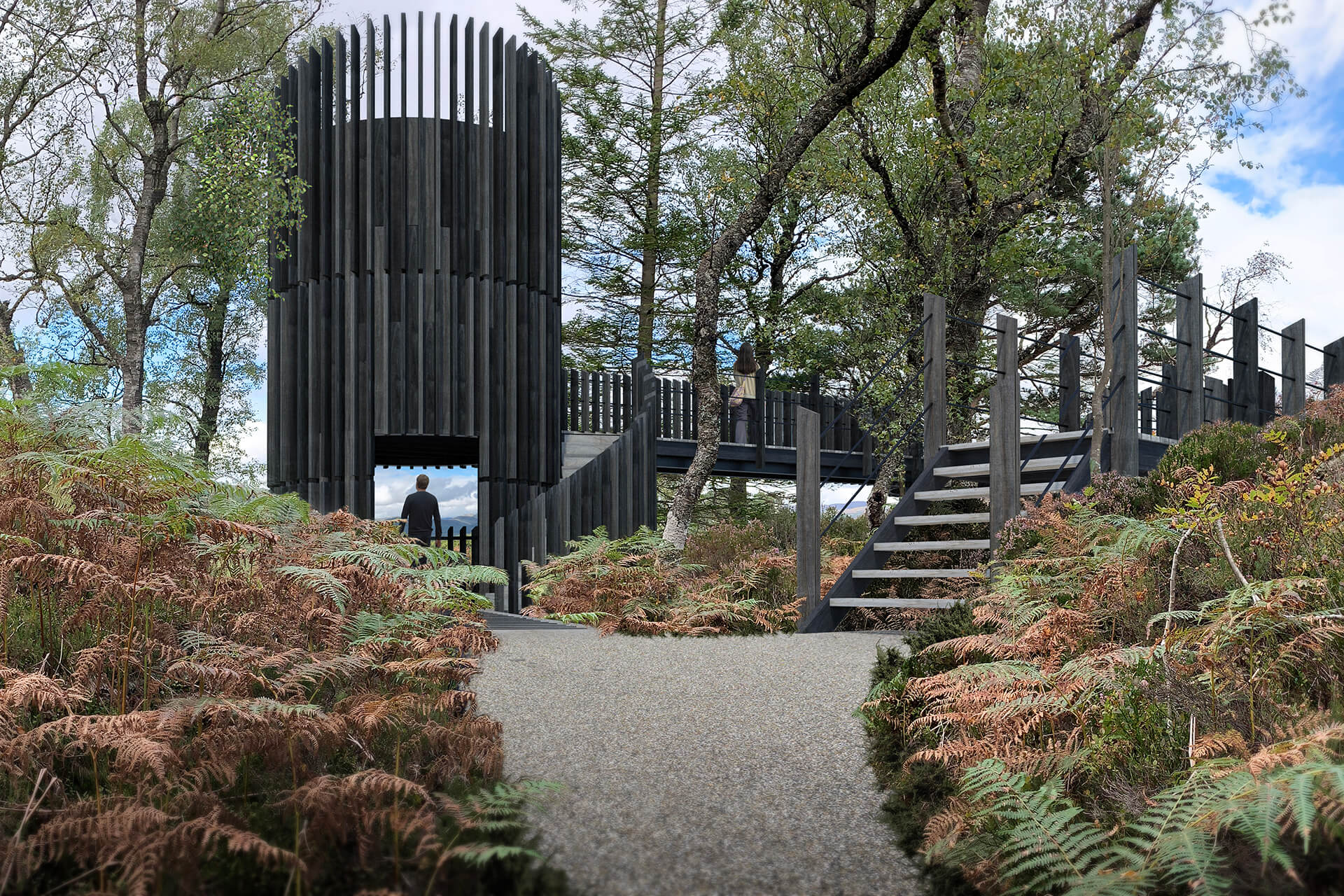
The year 1810 marked a pivotal moment in Scottish history with Sir Walter Scott’s *Lady of the Lake* written in homage of Loch Katrine and the surrounding landscape. These acclaimed works put Loch Katrine on the map, with huge visitor numbers flocking to the site to witness it’s beauty for themselves, which is now considered to be the birth of Scottish tourism.
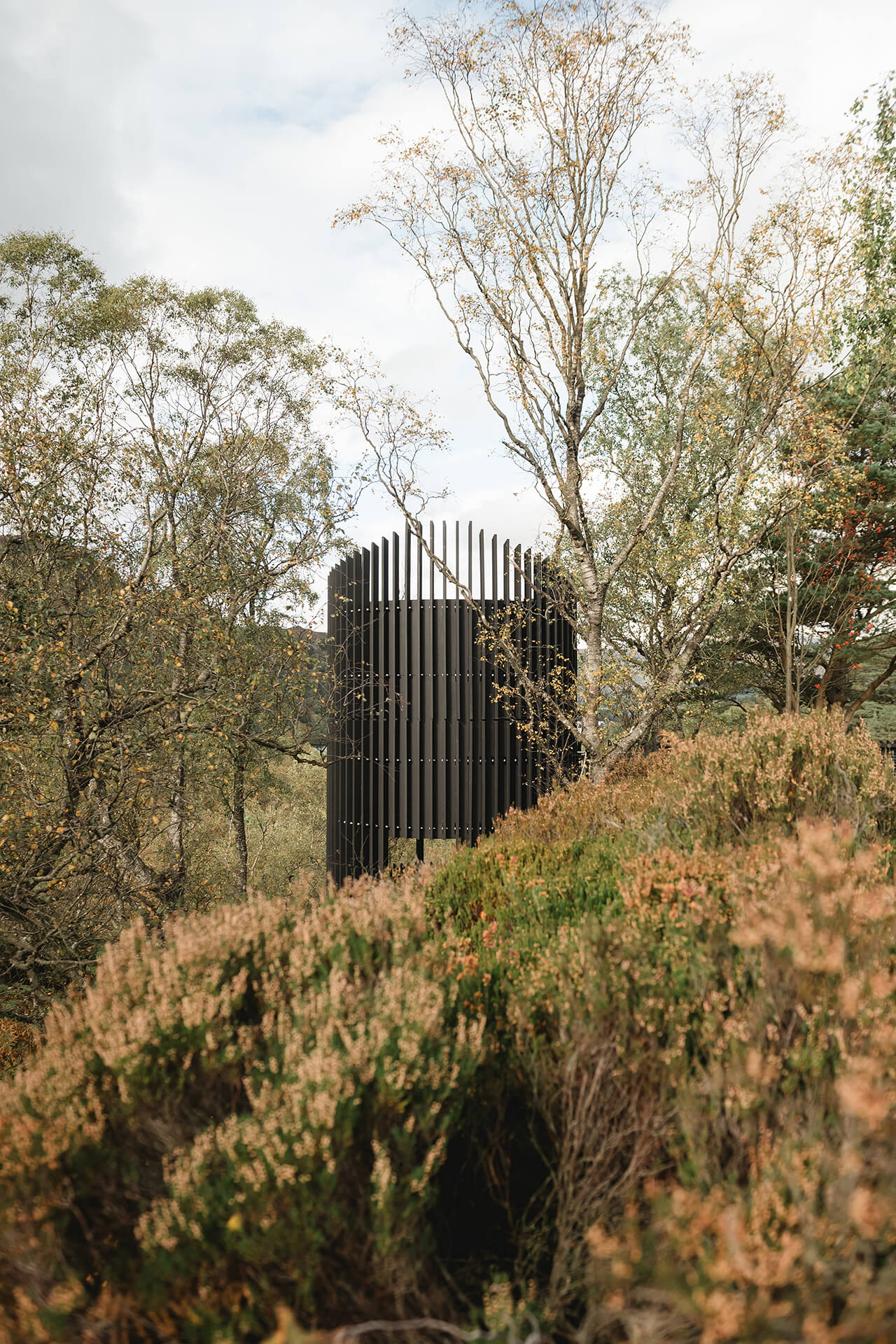
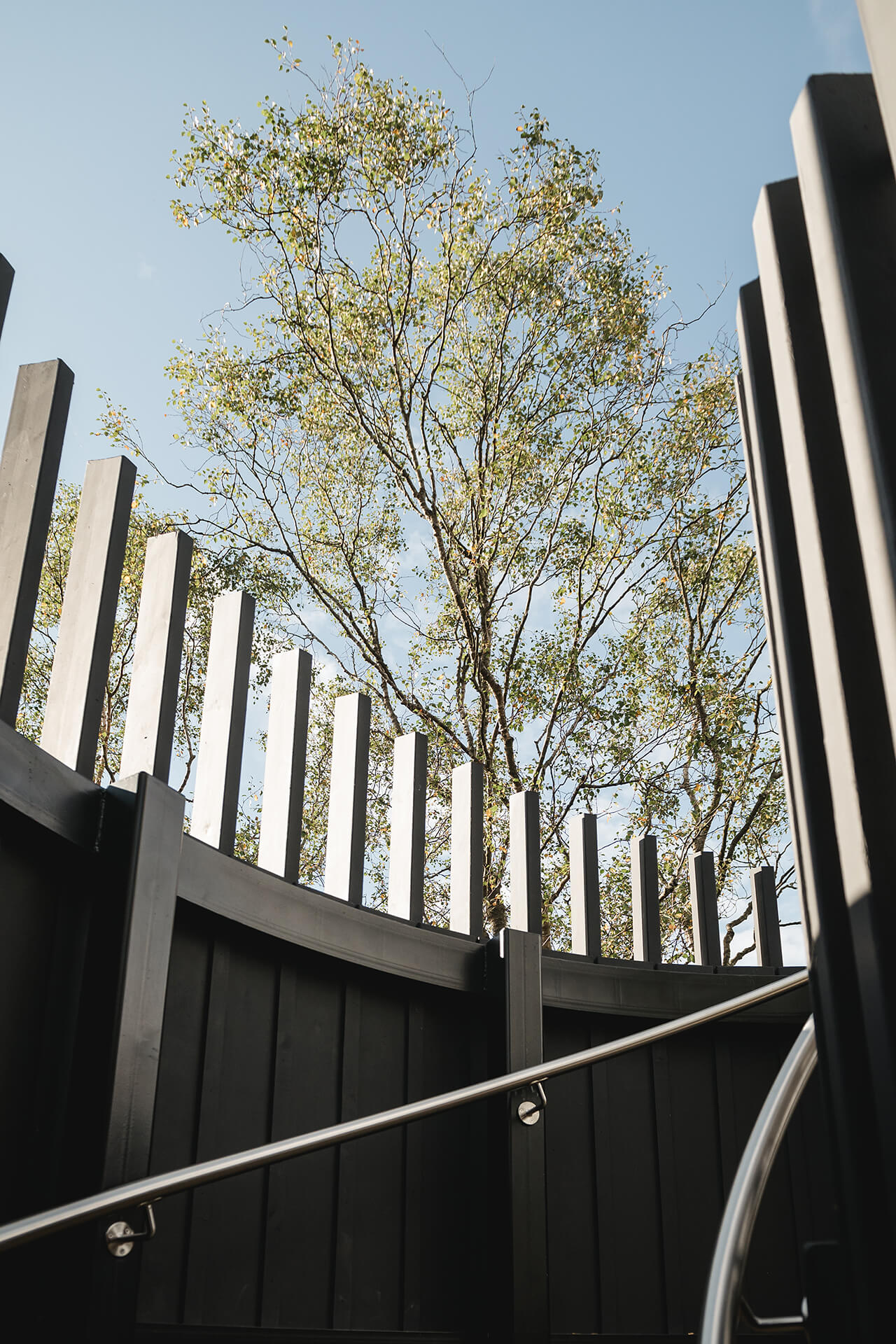
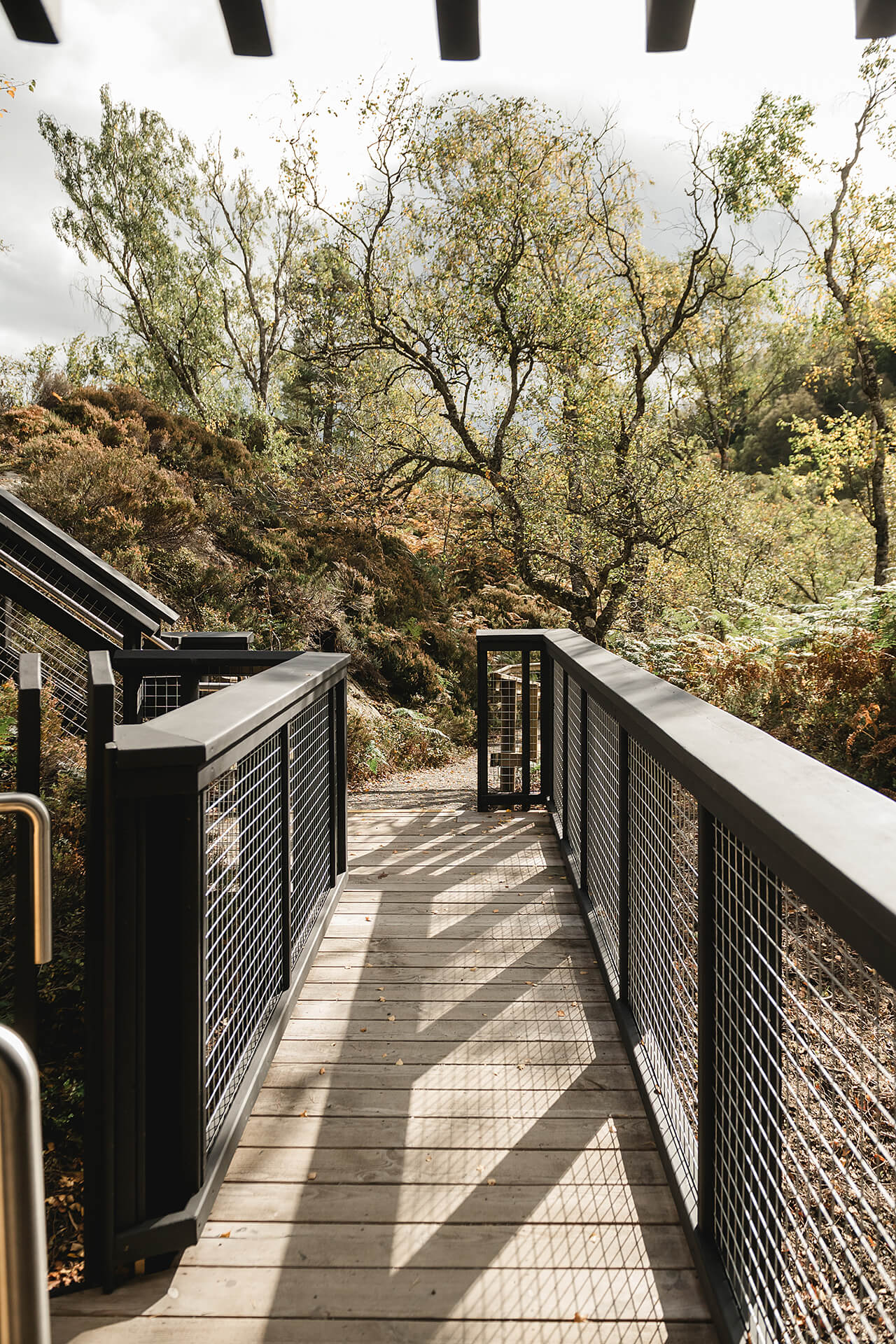
Our brief for this project was to create a sensitive and appropriate tribute to this rich narrative while adhering to the strict conservation requirements of the unspoiled landscape.
Embracing the ethos of the National Scenic Routes initiative, the vision for the structure aimed to harmonise with the landscape, enhancing its inherent beauty. The structure respects the delicate ecology of the National Park, fostering an environment where visitors can engage with its historical and natural significance, with minimal impact on the surrounding environment.
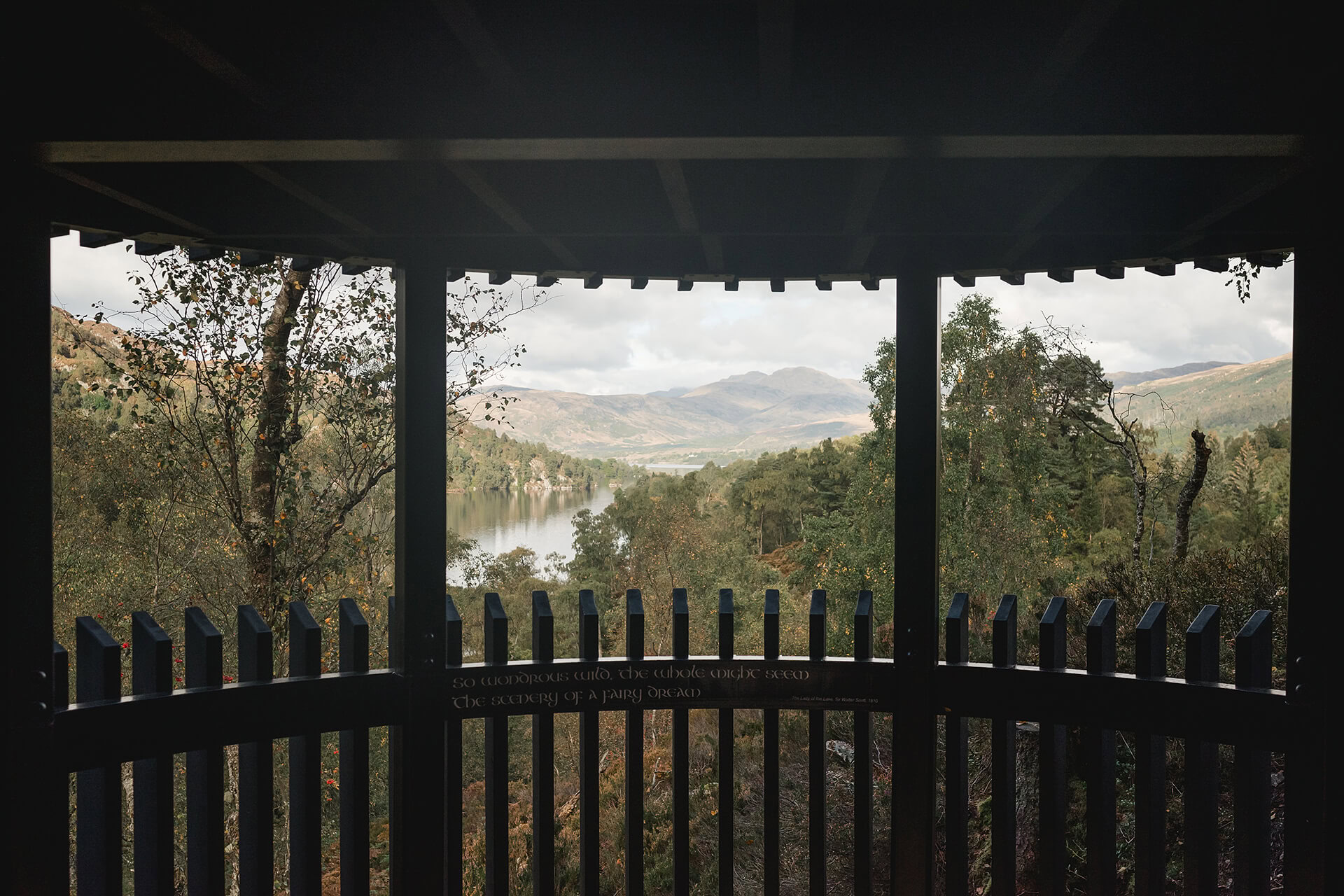
“So wondrous wild the whole might seem, the scenery of a fairy dream.”
The poem and its historic link to Loch Katrine were a constant inspiration and guideline throughout the process.
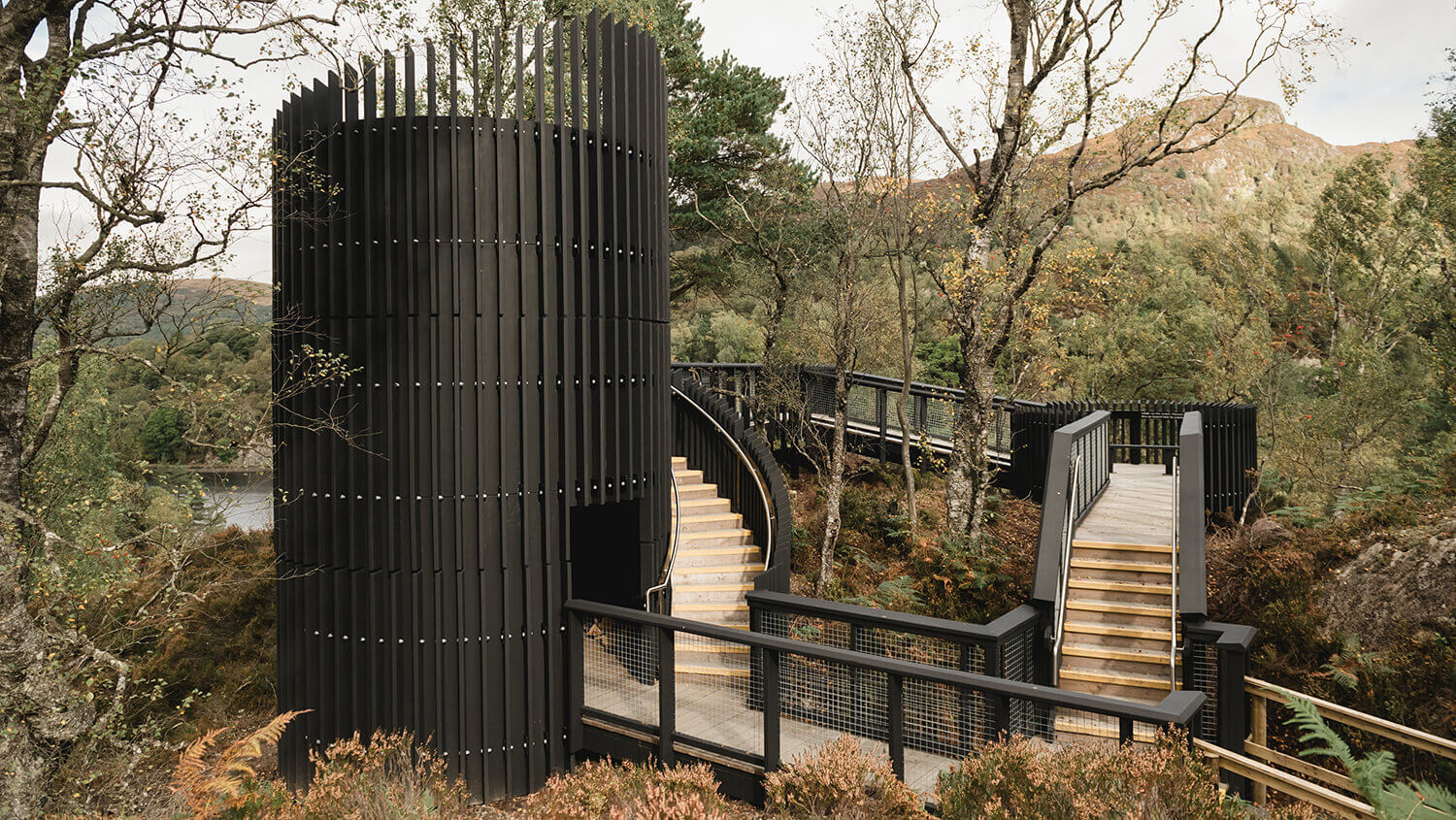
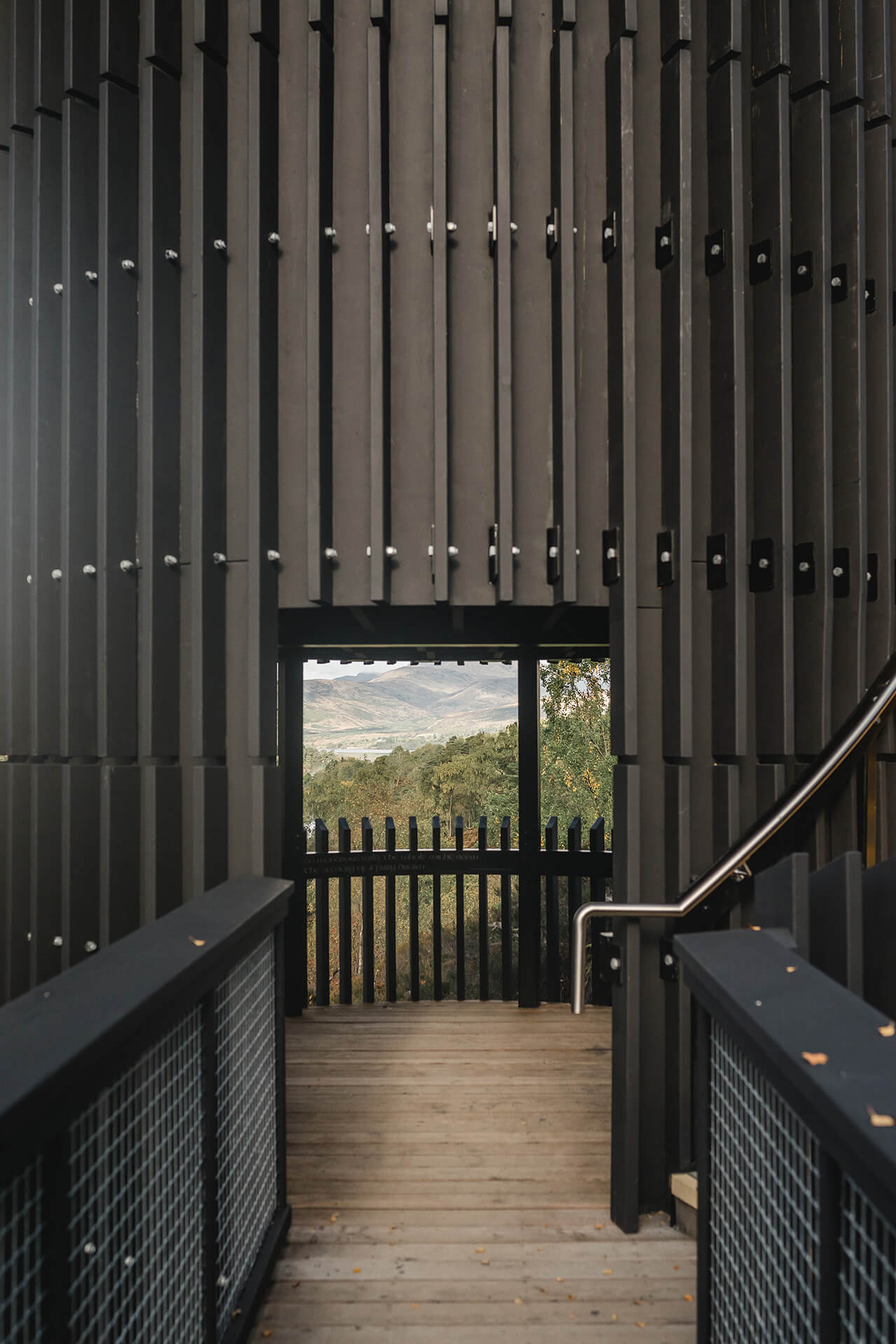
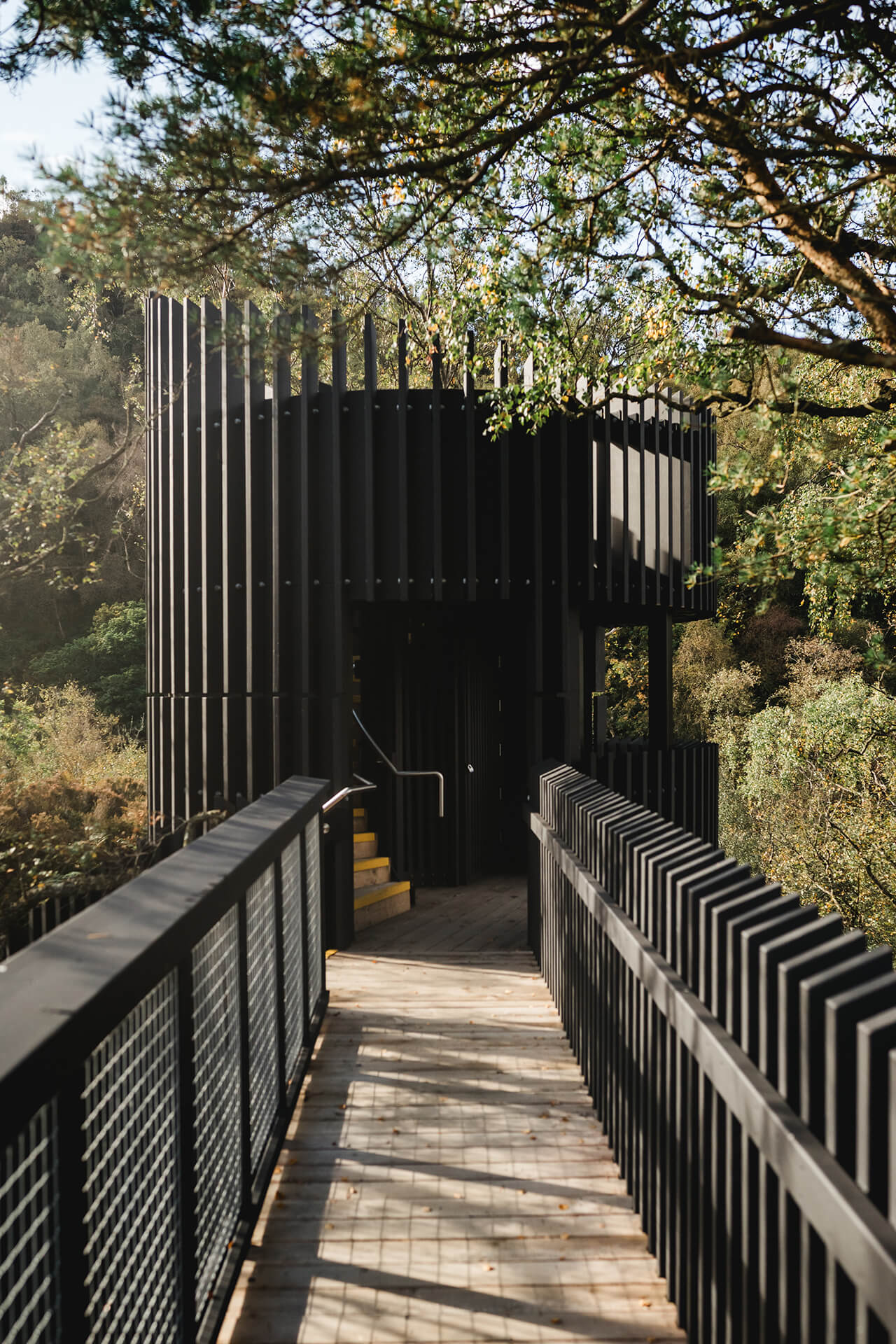
Following example of the architecturally led precedent projects in the wider National Park and beyond, a clean and contemporary form allows the structure to blend into the natural environment, aiming to enhance rather than detract from the landscape. The design incorporates scorched timber to honour Roderick Dhu’s Gaelic name, ‘Dhu,’ meaning ‘black, whilst the simple cylindrical form echoes the Victorian paintings of the original Watchtower, elegantly responding to the undulations of the hilltop.
The main body of the tower nestles into a low hollow allowing users to journey up through the structure to access higher, more exposed areas of the site. It is both a visual and experiential reward for those that have ventured up the reinstated Victorian pathway, providing not only a stunning vista over Loch Katrine and the Trossachs, but also a magical place for some quiet contemplation.